For home service businesses, performance often changes before the monthly report has a chance to explain it. That is why operators need more than a backward-looking view of leads and revenue. They need a way to understand which signals point to future demand, so the next marketing, staffing, and budget decision is based on what is likely to happen next.
Mackdata is built for that kind of work. It connects CRM data, call tracking, marketing analytics, and revenue outcomes so home service operators can see what is likely to happen next and what they should do about it.
What is Predictive Analytics?
Predictive analytics is the practice of using past performance to estimate future outcomes. In home services, that can mean forecasting seasonal demand. It can also mean predicting which campaign is likely to create booked jobs next month.
The value is practical. A contractor does not need another static dashboard. The team needs a clearer way to decide where to spend, which service lines need attention, and when demand is about to shift.
Predictive Modeling Turns Historical Data Into Forecasts
Predictive modeling uses historical data to find patterns that may repeat. A home service business already produces useful signals every day. Calls show demand. CRM records show lead quality. Marketing analytics show which channels generate activity. Revenue data shows which activity turns into profitable work. A predictive model uses those signals to forecast what may happen next.
AI Helps Home Service Teams Spot Future Demand
AI helps predictive analytics move faster. Instead of manually reviewing reports, teams can use artificial intelligence to detect trends across connected data. Machine learning can identify patterns that would be hard to spot in a spreadsheet.
Mackdata’s AI business intelligence approach is built around this difference. Mack helps teams ask plain-language questions about performance. That means an operator can move from “What happened last month?” to “Where should we focus spend next week?”
Turn static data into active growth. Let Mackdata forecast your next big revenue shift
Key Benefits of Predictive Analytics for Home Services
The benefits of predictive analytics become clearest when a home service company uses it to guide decisions before money is wasted. Instead of waiting for underperformance to show up at the end of the month, teams can act earlier. Predictive analytics supports better planning because it connects data to likely outcomes. That gives owners and marketing leaders a clearer way to manage demand, staffing, and budget.
Better Job Forecasting
Job forecasting helps home service teams prepare for demand before it arrives. A forecast can show when appointment volume may increase. It can also show when demand may soften. This improves planning across the business. Dispatch teams can prepare for capacity needs. Marketing teams can shift budget before lead volume drops. Owners can see whether revenue targets are realistic.
For example, an HVAC company can use previous seasonal performance to estimate future demand. That forecast becomes more useful when it includes CRM outcomes and booked jobs rather than surface-level traffic metrics.
Stronger Marketing Decisions
Marketing decisions improve when teams can see what is likely to create revenue. Predictive analytics can help compare campaigns by expected performance instead of last-click activity.
This is especially important in home services because a lead does not always equal a job. A campaign may produce a high number of calls but a low number of qualified appointments. Another campaign may produce fewer leads but stronger revenue. Predictive analytics helps teams compare quality instead of volume. That gives marketing leaders a better way to optimize spend and protect margin.
Lower Revenue Risk
Revenue risk grows when operators make decisions from incomplete data. A home service company may keep funding a campaign because it appears active. The same campaign may fail to produce booked jobs.
Predictive analytics lowers risk by highlighting weak signals earlier. If lead quality starts to decline, the team can respond before revenue falls. If a territory underperforms, the business can adjust its plan before the month is over. This does not remove uncertainty. It creates better visibility. For home service operators, that visibility can protect cash flow and reduce wasted spend.
Improved Lead Quality
Lead quality is one of the most important outcomes for home service marketing. A predictive model can help identify which sources are likely to create serious customers. That matters because not every lead deserves the same response. Some calls are urgent. Some forms are low intent. Some campaigns create jobs with stronger average revenue.
When predictive analytics connects marketing activity to customer behavior, teams can prioritize leads with better potential. This creates a cleaner path from marketing spend to booked work.
Clearer Budget Confidence
Budget confidence comes from knowing why spend is moving. Predictive analytics gives teams a stronger basis for allocation because it connects campaigns to likely revenue. A home service business can use predictive insights to guide budget decisions in a simple sequence:
- Review historical performance by channel.
- Connect leads to booked jobs.
- Compare service-line demand.
- Forecast likely revenue.
- Allocate budget toward the strongest opportunity.
This helps teams avoid reactive spending. It also helps owners explain why a budget should increase, decrease, or shift.
Protect your margins and outpace underperformance. Partner with Mackdata to plan ahead with certainty
Start Experiencing the Benefits of Predictive Analytics
How Predictive Analytics Connects Marketing Spend to Revenue
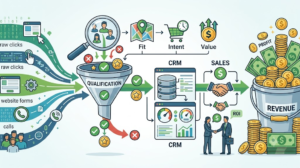
Marketing performance is easy to misunderstand when systems are disconnected. Ad platforms show clicks. Call tracking shows call volume. CRM systems show lead status. Revenue systems show closed work. Predictive analytics becomes more powerful when those signals are connected. For home service companies, the goal is not simply to predict activity. The goal is to predict revenue impact.
Attribution Shows Which Campaigns Create Booked Jobs
Attribution shows where a customer came from. In home services, attribution needs to go further than channel reporting. It should show which campaigns created booked jobs.
That is where marketing attribution software becomes important.
If a campaign creates calls but those calls do not become jobs, the business needs to know. If another campaign creates fewer calls but stronger booked revenue, the business needs to know that too.
Predictive analytics builds on attribution by helping teams forecast which campaigns are likely to produce future outcomes. That makes planning more precise and less dependent on guesswork.
Closed-Loop Data Reveals True Marketing ROI
Closed-loop data connects marketing touchpoints to business outcomes. In home services, that means linking the first interaction to the booked job and the final revenue. This is where many teams struggle. They may know which ads generated calls. They may not know which calls created profitable work. Without that connection, marketing ROI remains unclear.
A closed-loop view helps teams track cross-channel marketing performance more accurately. It also helps predictive analytics focus on outcomes that matter.
Bridge the gap between clicks and cash. Predict your true revenue impact with Mackdata
How Home Service Operators Use Predictive Analytics
Home service companies use predictive analytics in different ways because demand patterns vary by trade. The core idea stays the same. Use data to anticipate future performance before decisions become urgent. This is especially useful for operators who manage multiple campaigns, territories, and service lines.
Home Service Industries That Benefit from Predictive Analysis
HVAC Teams Can Forecast Seasonal Demand
HVAC demand fluctuations follow the weather. Instead of reacting to sudden temperature spikes, teams can use predictive analytics to forecast upcoming call volumes. This data allows businesses to optimize staffing, budgets, and scheduling before peak seasonal demand spikes hit them.
Plumbing Companies Can Predict Emergency Lead Volume
Plumbing companies face urgent demand driven by weather or infrastructure issues. Predictive analytics identifies these patterns using lead history and call data. This forecasts emergency lead volumes, enabling smarter, proactive staff scheduling and better marketing via plumber marketing software tools.
Electrical Contractors Can Identify Revenue Trends
Electrical demand shifts across upgrades, repairs, and installations. Predictive analytics helps contractors identify which services are gaining momentum and which campaigns drive revenue. Mackdata’s marketing software provides a clear way to connect these marketing activities directly with successful revenue outcomes.
Roofing Companies Can Prioritize High-Intent Territories
Roofing demand depends heavily on weather, property conditions, and local market activity. Predictive analytics helps companies prioritize high-intent territories before wasting budget. A territory-level forecast ensures teams focus where demand converts best, creating a direct path to closing more deals.
Master your multi-territory demand before it hits. Stay ahead of the market with Mackdata
Boost Your Home Service Business Today
Build Home Service Forecasting Confidence With Mackdata
At Mackdata, we understand that managing a home service business means constantly guessing your next move, from technician dispatching to seasonal inventory. That is why we built our forecasting tools to turn unpredictable schedules into reliable growth strategies. By analyzing your historical job data, local weather patterns, and real-time market trends, we take the guesswork out of your operations.
We don’t just hand you raw numbers; we deliver actionable, high-confidence insights so you can staff accurately, slash overhead costs, and secure predictable revenue. Partnering with us means gaining a clear, stress-free view of your company’s future.