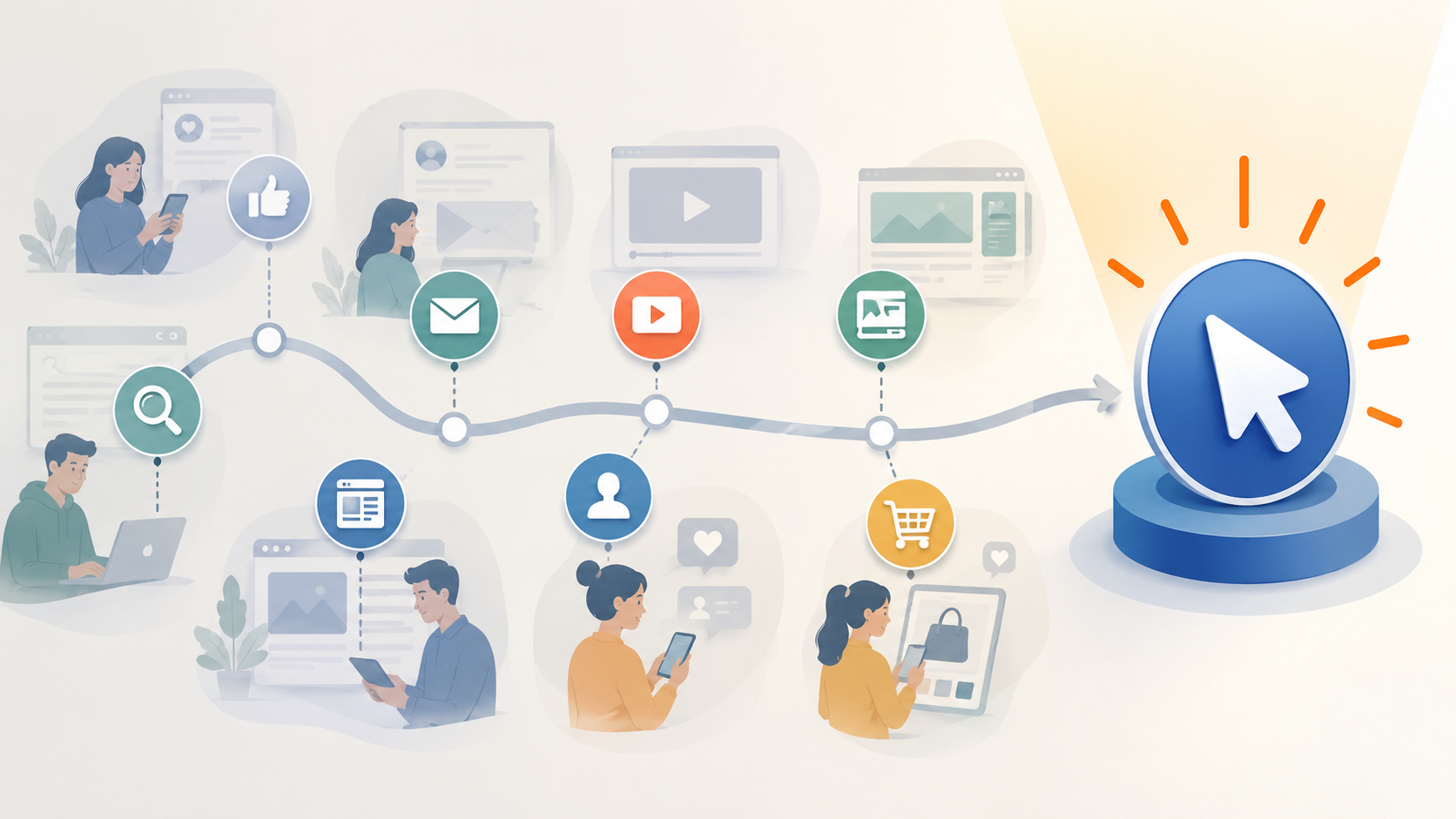
Last click attribution is simple. That is exactly why it is so dangerous.
The model gives full credit for a conversion to the final marketing touchpoint before a customer takes action. If someone clicks a branded search ad and then books a service call, the branded search ad gets all the credit. If a shopper opens a discount email and then buys in-store, the email appears to drive the sale.
The problem is that marketing rarely works that cleanly. Customers research, compare, leave, return, ask questions, search again, and convert later. By the time the final click happens, the decision may already be mostly made.
For operators and marketing teams trying to understand what actually drives revenue, last click attribution can create a false sense of clarity. It makes reporting easier, but it often makes decision-making worse.
What Is Last Click Attribution?
Last click attribution is a marketing attribution model that assigns 100% of conversion credit to the last interaction before a lead, sale, booked job, or other conversion event.
That interaction might be a paid search click, an email click, a direct website visit, a retargeting ad, or another final touchpoint. The model does not consider earlier marketing activity that introduced the customer, built trust, explained the offer, or moved the buyer closer to action.
Why Marketers Still Use Last Click Attribution
Last click attribution remains common because it is easy to understand. There is one conversion, one final touchpoint, and one credited channel. That makes reports clean and simple.
It also fits the way many platforms prefer to report performance. Ad platforms are built to prove their own value. If the final measurable click happened inside that platform, the platform can claim the conversion. That creates a neat dashboard, but it does not always create an accurate view of revenue impact.
For small teams with very short buying cycles, last click attribution can offer a basic directional signal. It can show which touchpoints help close demand that already exists. The issue begins when businesses treat that closing touchpoint as the full reason the customer converted.
The Difference Between Conversion Tracking and Revenue Clarity
Conversion tracking tells you that an action happened. Revenue clarity tells you why the action happened and whether it created meaningful business value. Last click attribution often stops at the easiest event to measure, which means it can reward activity that looks productive while ignoring the marketing that created real buying intent.
That gap matters most for companies with offline sales, longer buying cycles, phone-based conversions, or multiple customer touchpoints across channels.
Simplicity shouldn’t cost you ROI. Upgrade to sophisticated insights that reflect how people truly buy
Improve Your Marketing Tracking
Why Last Click Attribution Creates a Flawed View of Marketing Performance
Last click attribution does not fail because the final touchpoint is irrelevant. It fails because the final touchpoint is rarely the whole story.
A customer may discover a home services company through a local display ad, read reviews, return through organic search, call after seeing a paid ad, and later book after clicking a follow-up email. If the email gets all the credit, the business may assume email is the primary revenue driver. In reality, the email may have worked because several earlier touchpoints already built confidence.
It Overvalues Bottom-Funnel Channels
Last click attribution tends to make bottom-funnel channels look stronger than they are. Branded search, retargeting, direct traffic, and promotional email often sit close to the final action. Because they appear near the end of the journey, they receive credit for demand that may have been created somewhere else.
This can push teams to overinvest in channels that capture existing intent while cutting the channels that create future demand. The short-term report may improve, but the pipeline can weaken over time.
It Undervalues Awareness and Consideration
Awareness channels often influence customers long before they are ready to convert. Social campaigns, video ads, direct mail, and educational pages may not produce the final click, but they shape the decision.
Under last click attribution, those touchpoints can look unproductive. That creates pressure to reduce spend on campaigns that introduce new customers to the business. Once those campaigns are cut, the business may see fewer branded searches, fewer direct visits, and fewer high-intent leads later.
It Can Turn Good Data Into Bad Budget Decisions
Poor attribution isn’t just a reporting headache; it’s a direct threat to your bottom line. When a dashboard suggests one channel has the lowest cost-per-lead, the natural instinct for a marketing director is to double down. However, without seeing the full customer journey, this move is often a gamble.
The danger lies in what the data doesn’t show. A campaign that appears “quiet” might actually be the primary driver of brand trust, while a vendor might only look valuable because they happened to be the final touchpoint before a sale. When you optimize based on flawed data, you risk scaling “efficiency” while inadvertently starving the very channels that fuel your long-term growth.
Stop ignoring the campaigns that build trust. See every interaction that leads to a sale
How Last Click Attribution Breaks Down Across Home Services Journeys
In industries like HVAC, plumbing, or electrical, the path to a booked job is rarely a straight line. Homeowners don’t usually click an ad and buy instantly; they engage in a multi-stage process of research and validation.
Home Services Marketing Needs More Than the Last Call Source
HVAC Attribution Must Account for Urgency and Seasonality
HVAC customer journeys fluctuate with the weather. A homeowner might research replacements for weeks before an emergency failure triggers a final, branded search. If attribution only credits that last click, the seasonal awareness campaigns and organic content that originally built the relationship remain hidden, leading to poorly informed budget decisions.
Plumbing Attribution Should Separate Calls From Job Value
Plumbing leads often appear instantaneous during emergencies, yet the decision to book is rarely random. While a frantic homeowner makes the final call, their choice is rooted in previous exposure to SEO, reviews, and service pages. Attribution must look past the urgent contact to credit the channels that established credibility.
Electrical Contractor Attribution Must Connect Leads to Completed Work
For electrical contractors, a lead’s value varies wildly between minor repairs and major installations. Last-click models often credit the final form submission while ignoring the touchpoints that nurtured the lead. To grow, contractors must link their attribution to booked revenue, ensuring they reward the sources that drive profitable, completed work.
Home services sales are complex. Map the entire path from the first leak to revenue
Multi-Point Attribution for Home Services
What to Use Instead of Last Click Attribution
The better approach is not to replace one oversimplified model with another. First click attribution has its own blind spots because it gives all credit to the introduction. Linear attribution can also be too blunt because it spreads credit evenly, even when some touchpoints clearly had more influence.
The goal is to build a measurement system that reflects how customers actually move from attention to revenue.
Multi-Touch Attribution Gives the Journey More Context
Multi-touch attribution distributes credit across more than one interaction. It helps marketers see how different channels contribute at different stages of the journey.
A practical attribution strategy should show how customers discover the brand, what brings them back, which channels assist conversion, and which touchpoints correlate with higher-value outcomes. The point is not to make the report more complicated. The point is to stop pretending that one click explains the entire decision.
Closed-Loop Attribution Connects Marketing to Revenue
Closed-loop attribution goes further by connecting marketing activity to actual business outcomes. Instead of stopping at a lead or form fill, it follows the customer through CRM, POS, call tracking, scheduling, pipeline, and sales data.
That matters because not every conversion has the same value. One channel may generate many cheap leads that never close. Another may generate fewer leads that turn into profitable customers.
When attribution connects to revenue, the business can evaluate marketing based on outcomes that matter.
AI Marketing Attribution Makes the Data Easier to Act On
AI marketing attribution helps teams move beyond static dashboards. Instead of digging through disconnected reports, teams can ask direct questions about performance and receive answers based on connected data.
Mackdata is an AI Marketing attribution platform built to connect CRM, POS, call tracking, and marketing data so businesses can see what is driving revenue. That means teams can evaluate campaigns by booked jobs, closed deals, in-store purchases, market performance, and actual return instead of relying on last click reporting alone.
Ready for a better view? Adopt a model that rewards every step of your customer’s journey
Learn More About AI Marketing Attribution
How to Move Away From Last Click Attribution
Moving away from last click attribution starts with changing how your team uses reporting. Last click data can still show which touchpoints close conversions, but it should not decide budget alone. A better approach connects marketing, sales, and revenue data so campaigns are judged by real business outcomes.
- Treat Last Click as One Signal: Use last click attribution to understand the final touchpoint before a conversion, but do not treat it as the full story. It can show closing behavior, not every channel that influenced demand.
- Connect Revenue and Marketing Systems: Bring CRM, call tracking, ad platform, website analytics, POS, and sales data into one reporting view. This helps your team connect the marketing funnel to revenue more accurately.
- Review Campaigns by Business Outcomes: Evaluate campaigns based on qualified leads, booked appointments, completed sales, customer value, and revenue influence. This shifts attribution away from surface-level activity and toward the channels that actually help grow the business.
Questions Your Attribution Reporting Should Answer
Strong attribution reporting should help a business understand what is working across the full path to revenue. It should answer questions like:
- Which campaigns influence our highest-value customers?
- Which channels assist conversions even when they do not get the final click?
- Which markets, zip codes, or territories produce the strongest revenue?
- Which lead sources create booked jobs, closed deals, or completed purchases?
- Which campaigns should receive more budget because they drive profitable outcomes?
These questions are difficult to answer with last click attribution alone. They require connected data and a model that can see beyond the final touchpoint.
Work With Mackdata and Stop Letting the Last Click Make the Budget Decision
Work with Mackdata. We help you connect marketing, sales, call tracking, CRM, and revenue data so you can see which channels actually create qualified leads, booked jobs, and profitable customers. Instead of relying on surface-level attribution, we build clearer reporting that shows the full customer journey. With Mackdata, you can invest with more confidence, reduce wasted spend, and make decisions based on business outcomes.
Unlock the answers you need to scale. Get deep insights into customer value and channel performance
Frequently Asked Questions About Last Click Attribution
Is last click attribution ever useful?
Last click attribution can be useful for understanding which touchpoints help close conversions. It is simple and easy to explain, which makes it helpful as a basic reporting view. The problem starts when businesses use it as the only model for budget decisions.
Why is last click attribution flawed?
Last click attribution is flawed because it gives all credit to the final interaction and ignores earlier touchpoints. That can undervalue awareness, education, social, content, direct mail, and other channels that help create demand before the final click happens.
What is better than last click attribution?
A better approach is to use multi-touch or closed-loop attribution. Multi-touch attribution adds context across the journey, while closed-loop attribution connects marketing activity to outcomes like booked jobs, closed deals, purchases, and revenue.
How does Mackdata help with marketing attribution?
Mackdata connects CRM, POS, call tracking, and marketing data into a unified view so teams can understand what is actually driving revenue. As an AI Marketing attribution platform, Mackdata helps businesses move beyond dashboard-level reporting and make decisions based on real performance.